

Most shops start Automation with a robot that loads one machine. That is the right first step — but it is not the finish line. The real prize is unattended production: a cell that keeps cutting after the operator goes home, and a shop that sells spindle hours instead of operator hours.
This guide covers the step after machine tending automation: pallet systems, flexible manufacturing, monitoring, and how to decide whether lights out machining is worth it in your shop. It is written for shops that already run a machine tending cell, or are planning one and want to leave the door open to running unattended later. CNC machine tending automation is the first rung of that ladder — unattended machining is the top of it, and the gap between the two is smaller than most shops assume.
What "Lights-Out Machining" Actually Requires
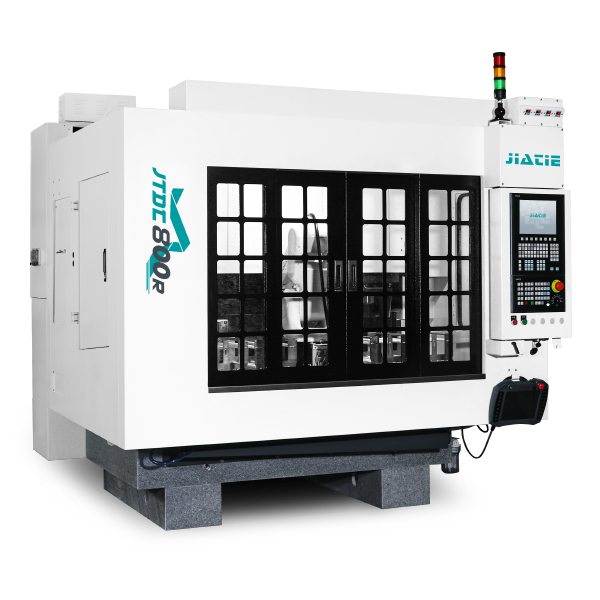
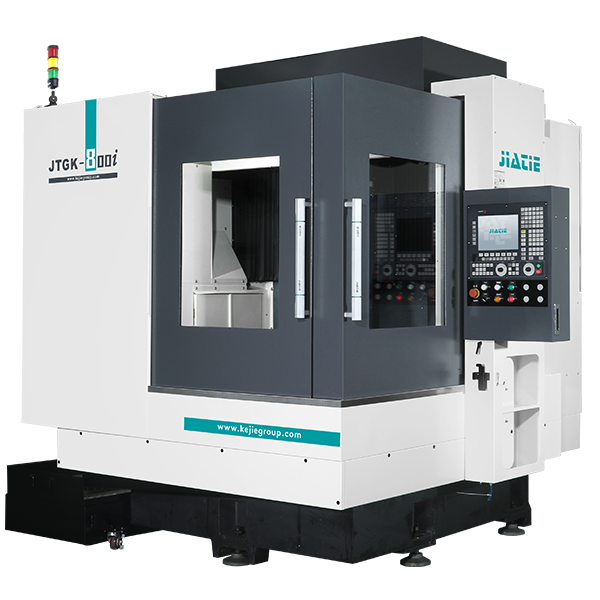
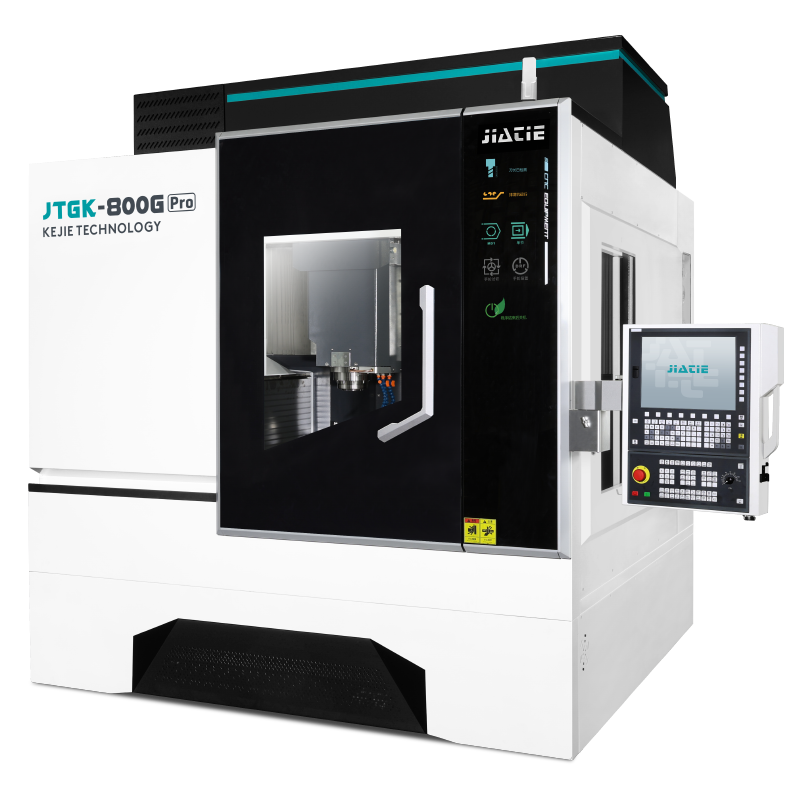
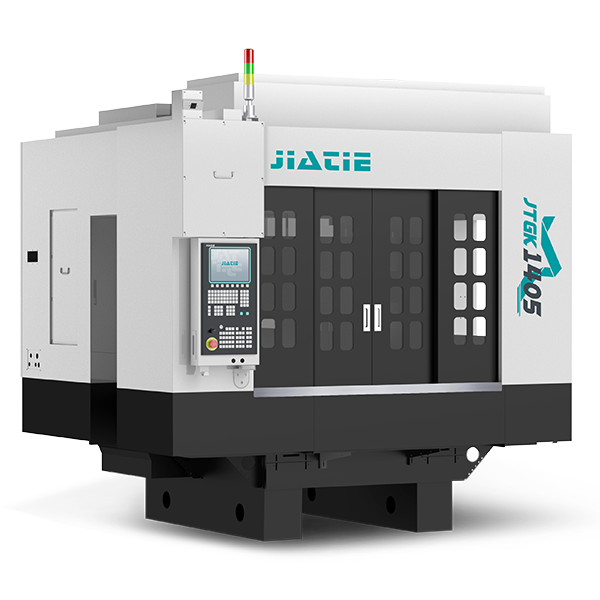
JTGK-800R Machining Center set up for unattended lights-out production
Unattended CNC machining is not a robot bolted to a machine. It is a chain of capabilities that all have to hold, because there is nobody standing by to fix the weak link. Four things have to be true:
- Enough work queued. A cell that runs out of parts at 8 p.m. has not saved anything. Either the batch has to be long, or parts have to be queued on pallets.
- Process stability. Tool wear, thermal drift and chip build-up all have to be predictable across the unattended window, or the parts at hour six will not match the parts at hour one.
- Failure handling. The system has to detect a broken tool, a missing part or a machine alarm and stop safely rather than keep cutting.
- Remote visibility. Someone has to know what happened overnight without being in the building.
Machine tending automation solves the first problem for one machine. The other three are what turn a cell into an unattended process — and it is worth being clear that automated machine tending and unattended machining are not the same thing. A robot cell that needs an operator to reset an alarm at 10 p.m. is automation; a process that runs to morning without intervention is unattended production.
From Machine Tending to Pallet Automation
A robot that loads a single machine still waits during the cut. A pallet changer or a pallet pool removes that wait: parts are set up on pallets while the machine is cutting, and the machine simply swaps pallets when it finishes. The result is a machine that only stops when the pallets run out.
This is why a pallet changer CNC machine is usually the second purchase after a robot cell, and often the more valuable one. An automatic pallet pool system goes a step further, holding enough pallets that a single machine can keep cutting through a whole unattended shift without anyone touching it.
| Level | What it looks like | Unattended window | Best for |
|---|---|---|---|
| 1. Robot cell | One robot tending one machine | Breaks, part of a second shift | First automation step; high-mix work |
| 2. Pallet changer | Two-station pallet system on one machine | A full shift | Medium batches, similar parts |
| 3. Pallet pool | Multi-pallet store feeding one or two machines | A full night | Long-running families of parts |
| 4. Flexible manufacturing system | Pallet pool plus robot or rail, several machines, central scheduling | Days | High-value parts, capacity-constrained shops |
The jump from level 1 to level 2 is usually the best value in the whole progression, because a pallet changer costs far less than a robot cell and removes the largest single block of idle time.
What a Flexible Manufacturing System Adds
A flexible manufacturing system, or FMS, is the point at which the cell stops being a machine accessory and becomes a production system. Typically it combines:
- A pallet store holding enough work for the unattended window.
- A rail-mounted robot or gantry serving two or more machines.
- A scheduler that decides which pallet goes to which machine next.
- Tool-life management, so tools are changed before they fail rather than after.
- Status reporting back to the shop, and alarms pushed to whoever is on call.
An FMS is not cheap, and it is not right for every shop. It pays when parts are high value, when the machine is the bottleneck rather than the order book, and when the same family of parts runs for long enough that the setup effort is amortised.
Monitoring: Making an Unattended Cell Trustworthy
Remote status collection is what makes lights out machining possible rather than merely theoretical. A practical monitoring layer covers three things:
| Layer | What it watches | Why it matters unattended |
|---|---|---|
| Machine status | Running, idle, alarm, door, spindle load | Tells you whether the cell actually produced anything overnight |
| Tool condition | Tool life counters, spindle load trends, breakage detection | Stops a broken tool from scrapping a whole pallet of parts |
| Part presence | Probe or vision check after loading | Prevents cutting air or crashing into a mis-seated part |
Machine tending IIoT solutions have become genuinely practical for mid-sized shops over the last few years — the sensors and gateways are inexpensive, and the value is not in dashboards but in the alarm that reaches the right person at 2 a.m.
How to Calculate the ROI on Unattended Production
The arithmetic of unattended running is more attractive than most shops expect, because the machine is already paid for. The only question is how many hours it currently sits idle. A CNC automation ROI calculation for lights out machining is therefore simpler than for a robot cell: you are not buying capacity, you are unlocking capacity you already own.
| Input | Example |
|---|---|
| Machine hour rate | USD 60 / hour |
| Unattended hours added per night | 6 hours |
| Nights per year | 220 |
| Recovered machine hours | 1,320 hours / year |
| Additional output value | USD 79,200 / year |
| Typical pallet-changer investment | USD 30,000 – 60,000 |
| Simple payback | Under 1 year |
Two caveats keep this honest. First, unattended hours only count if you have the work to fill them — a shop with a full order book benefits immediately, a shop with spare capacity does not. Second, the additional output has to be sellable; recovered hours that produce parts nobody ordered are not a saving.
What usually decides the case is a mix of the two: a shop that is turning work away, or quoting long lead times, gets both the recovered hours and the ability to sell them.
A Practical Route to Unattended Production
- Stabilise the process first. If a job needs an operator to adjust it every hour, automation will only make the problem faster. Prove the process can run unattended for one hour before planning for eight.
- Automate the load, then the pallet. Start with a machine tending cell, then add pallet automation once the cell is reliable. Doing both at once makes it hard to tell which part is failing.
- Add monitoring before extending the window. Going from one unattended hour to six without visibility is how shops scrap a night's production.
- Choose machines that are designed for it. Automatic doors, chip management sized for continuous cutting, tool-life management and a clean interface to the automation are cheap at the factory and expensive to retrofit.
Is Your Machine Ready for Unattended Running?
Before spending money on a pallet system or a flexible manufacturing system, check the machine itself. Five questions expose most of the risk:
| Check | Why it decides the outcome |
|---|---|
| Does the machine hold tolerance over six hours of continuous cutting? | Thermal drift is the most common reason unattended parts fail inspection |
| Can chips be cleared without an operator? | Chip accumulation is the second most common cause of a stopped night shift |
| Is there tool-life data available from the controller? | Without it, you cannot predict a tool change before it happens |
| Does the door open and close automatically and safely? | A manual door limits the cell to attended hours regardless of the robot |
| Can the machine report its status externally? | Remote status collection is what makes an overnight run safe to leave alone |
If two or more of these come back negative, the honest answer is that the machine — not the automation — is the project. Shops that buy the robot first and discover the thermal problem afterwards usually end up running the cell attended anyway, which is a poor return on a robot tending cell.
Suppliers who build custom robotic cells for machine tending will normally run this check before quoting, because a cell that cannot be left alone is a cell that will be blamed for a problem it did not cause.
FAQ
How many hours can a CNC machine realistically run unattended?
Most shops reach four to eight hours per night, limited by tool life, chip accumulation and the number of pallets available rather than by the machine itself. Extending beyond that usually means adding pallet capacity and automatic tool changing.
Do I need a flexible manufacturing system to run unattended?
No. A pallet changer on a single machining center is often enough to run a full shift unattended, and it costs a fraction of an FMS. Move to a flexible manufacturing system only when a single machine is genuinely the bottleneck.
What is the biggest risk in lights out machining?
Not the robot — the process. Thermal drift, tool wear and chip control are the three things that most often make parts drift out of tolerance overnight. Monitoring and tool-life management address all three.
Can unattended production work for high-mix, low-volume shops?
Partially. The unattended window shrinks because setups cannot be done without an operator, but a pallet system still lets one operator prepare work for the next shift. The gain is measured in hours rather than whole nights.
Should I buy a pallet changer or a robot cell first?
If the parts are similar and the batches are long, a pallet changer is usually the better first investment — it removes the largest block of idle time for the least money. If the parts vary and the machine is loaded by hand, a robot cell comes first, with pallet automation added once the cell is reliable.
Planning the Next Step With Kejie
Kejie builds the machine tool and the automation that runs it, which matters most at exactly this stage. A machine specified for unattended running — automatic door, pallet interface, chip management, tool-life data — is a different machine from one bought for manual operation, and the difference is far cheaper to specify up front than to retrofit.
Our automated processing solutions and machine tool intelligent solution range cover both single-machine machine tending and multi-machine automation, built around our own machining centers, grinding machines and 5-axis machines.
Tell us how many hours your machine currently runs per week and what is stopping it from running more. We will tell you which step — machine tending, pallet automation or a full flexible manufacturing system — is worth the investment in your case.