

Machine tending robot projects rarely fail because the robot was too slow. They fail because the robot was chosen before the part, the gripper and the feed strategy were understood. A cell that looks convincing in a brochure will sit idle if the gripper cannot hold the part consistently, if the machine tending station cannot keep the loader fed, or if the cycle time never pays back the investment.
This guide is written for shops that already own CNC machines and are now deciding how to automate loading and unloading. It covers the three machine tending robot types, how to calculate whether a cell will pay back, what a complete cell actually contains, and the checks that separate a smooth installation from an expensive lesson. The same questions apply whether you are specifying your first automated machine tending cell or replacing a manual load on an existing machine.
Machine tool tending is a narrower problem than general factory automation, and that is good news. The part count is limited, the machine interface is known, and the cycle is predictable — which means the design can be settled on paper before any hardware is ordered. Kejie's automated processing solutions are built on exactly that principle.
Why Machine Tending Robots Fail — and What to Check First
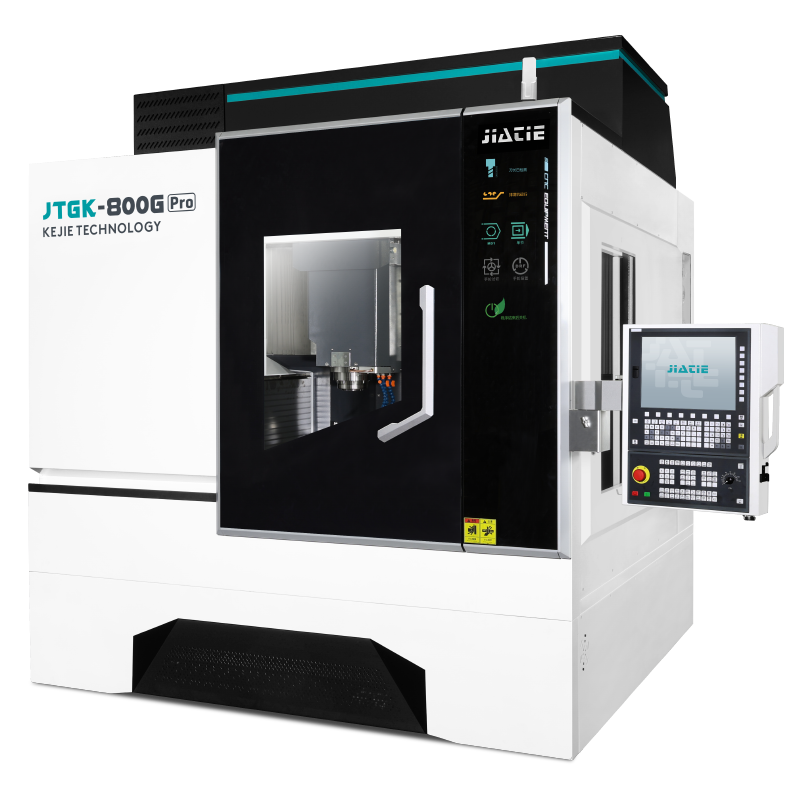
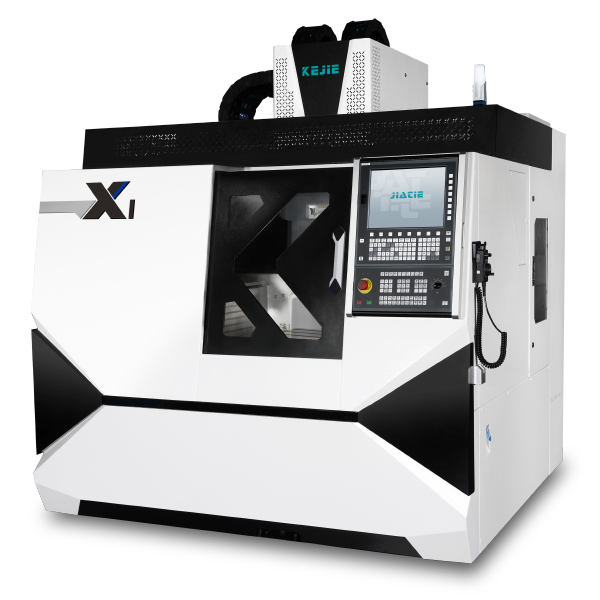
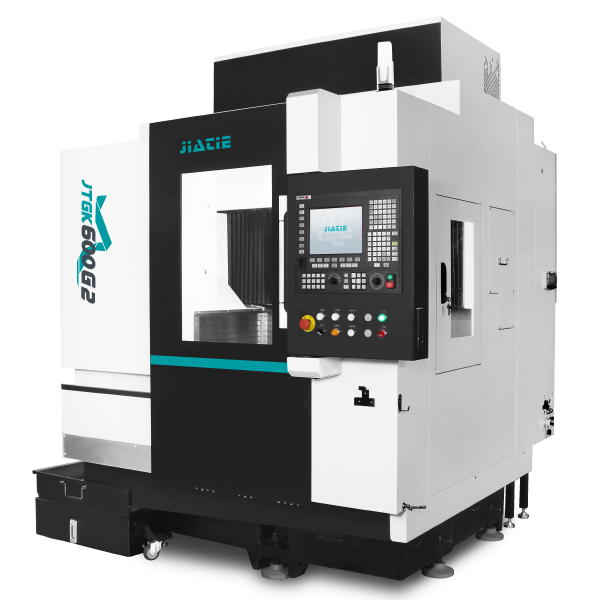
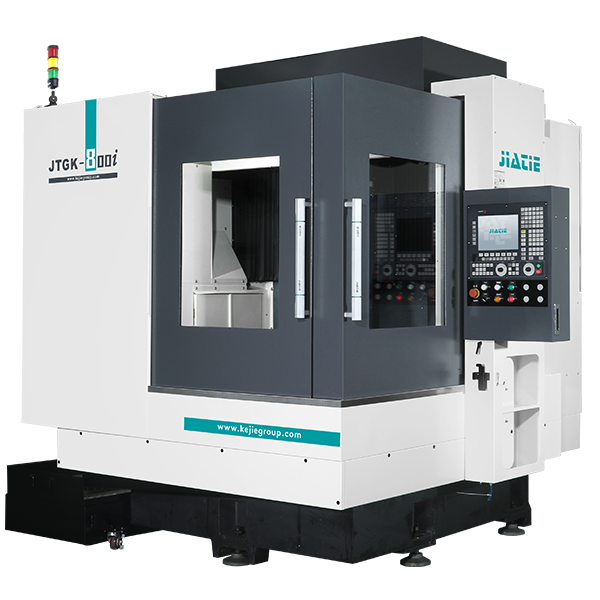
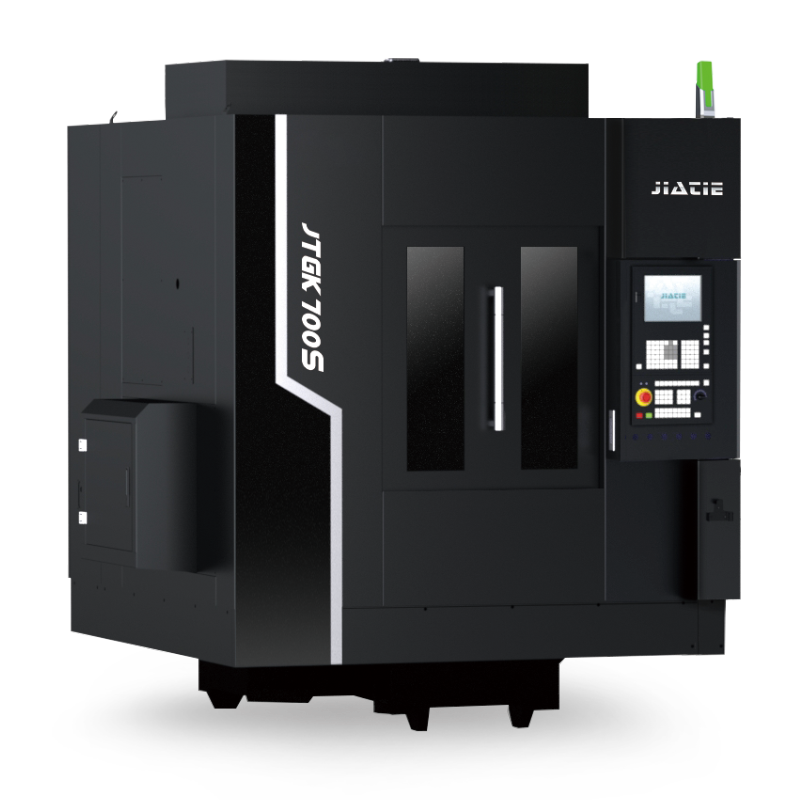
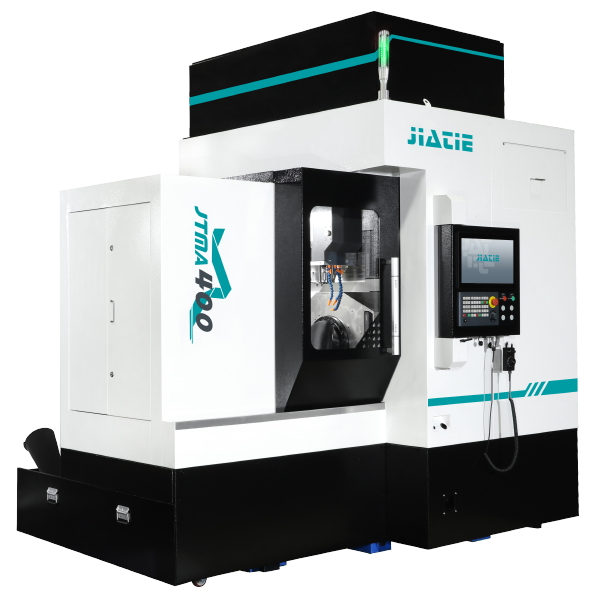
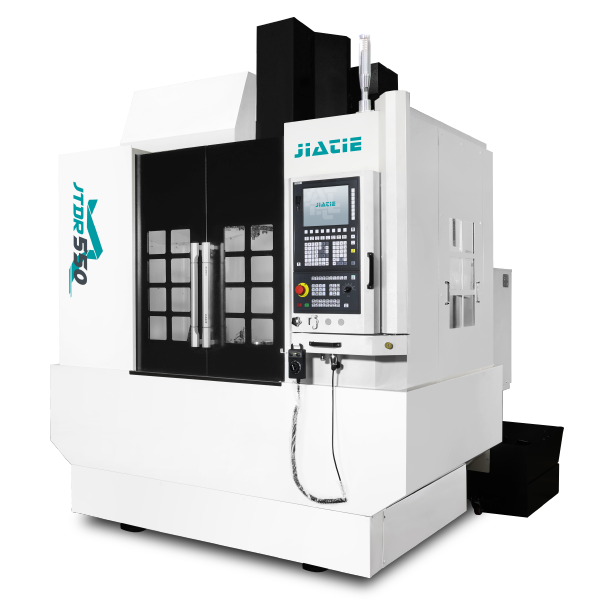
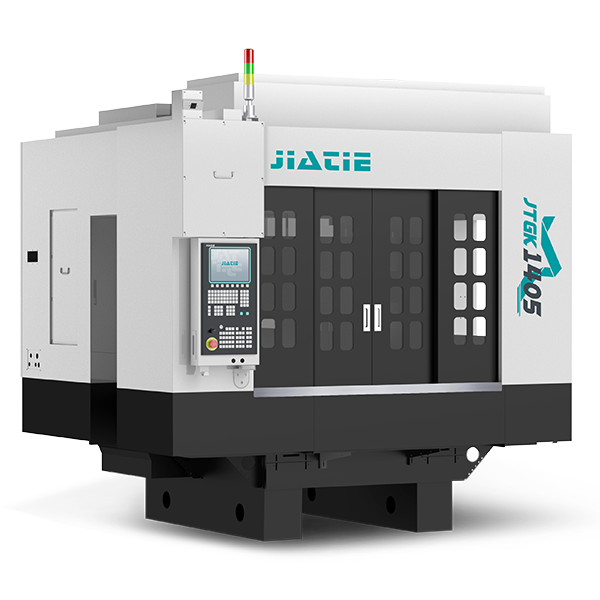
JTGK-800G Pro CNC High Speed Machine prepared for robotic machine tending
Before any quotation is requested, four numbers decide whether robotic machine tending will work in your shop. Write them down, because every supplier you talk to will need them:
- Part range. The smallest and largest part you intend to run, in millimetres and in kilograms. A cell is normally designed around the largest part and validated on the smallest.
- Batch size and changeover frequency. A shop running 5,000 identical parts per week and a shop running 20 different parts per day need completely different machine tending systems.
- Machine cycle time. The robot must load and unload inside the machining cycle, or the cell will not recover the automation cost.
- Part presentation. How parts arrive — random in a bin, aligned on a tray, stacked on a pallet, or straight off a previous operation.
The most common cause of a disappointing machine tending project is a part presentation problem disguised as a robot problem. If parts arrive randomly in a bin, the cell needs either bin-picking vision or a human or automated step to place them in a known position. That single decision changes the cost of the cell more than the choice of robot brand.
Machine Tending Robot Types: Articulated, Gantry and Cobot
Three architectures cover almost every CNC machine tending application, and the same three cover almost every machine tool tending task. Each has a natural home, and choosing the wrong one is the second most common source of trouble.
Suppliers who build custom robotic cells for machine tending will normally offer all three, and the honest ones will steer you away from the architecture that does not fit. A robot tending cell is a system, not a product — the arm is selected last, after the part, the gripper and the feed strategy are settled.
| Type | Best for | Typical reach / payload | Watch out for |
|---|---|---|---|
| Articulated industrial robot | High-volume, single-part or narrow-part-range production running three shifts | Up to 2,000 mm reach, 10–50 kg payload | Requires guarding or a safety-rated installation; floor space |
| Gantry / linear loader | Machining Centers and grinding machines with a fixed load position and heavy parts | Built to the machine travel; very high payload | Less flexible if the part envelope changes; long lead time |
| Cobot (collaborative robot) | High-mix, low-volume work; short runs; shops without space for fencing | Usually 500–1,300 mm reach, 5–18 kg payload | Lower speed; a risk assessment is still mandatory |
For a machine tending robot that will run one family of parts around the clock, an articulated robot or a gantry loader is normally the most productive answer. For a shop that changes jobs every few hours, a cobot usually wins on flexibility even though it is slower — a slower robot that is quick to reprogram beats a fast robot that sits waiting for the next setup.
How to Size a Machine Tending Cell: Cycle Time and Payback
Automated machine tending is justified by recovered spindle hours, not by labour savings alone. The calculation is straightforward and worth doing before you ask for a price.
If your machine currently runs 6 hours of spindle time in an 8-hour shift, the machine is idle 25% of the time. A machine tending robot that raises spindle utilisation to 7.2 hours recovers 1.2 hours per shift, which is roughly 300 hours per machine per year on a single-shift pattern — and considerably more when the cell runs unattended through breaks and between shifts.
| Input | Example | Why it matters |
|---|---|---|
| Machine hour rate | USD 60 / hour | Converts recovered time into money |
| Recovered spindle hours | 300 hours / year | From the utilisation gain above |
| Annual benefit | USD 18,000 | Before labour and scrap savings |
| Cell investment | USD 45,000 – 90,000 | Robot, gripper, feed station, guarding, integration |
| Simple payback | 2.5 – 5 years | Single shift; typically halves on two or three shifts |
Two details change this picture dramatically. First, unattended running: if the machine tending cell can run through a second shift without an operator present, payback shortens in proportion. Second, scrap: consistent robotic loading removes the variation that comes from manual clamping, which matters most on hard-to-cut materials and precision parts where a single scrapped workpiece can be expensive.
What a Complete Machine Tending Cell Contains
A machine tending robot is only about a third of the cell. The parts that decide whether it works are the ones around it.
End-of-Arm Tooling (EOAT) for Machine Tending
The gripper is designed around the part, not around the robot. A dual gripper that holds one raw and one finished part lets the robot swap parts in a single entry into the machine, which is often the difference between a cell that keeps up and one that does not. For thin-walled or finished surfaces, soft jaws, vacuum or magnetic grippers protect the workpiece; for castings and forgings, a self-centring mechanical gripper is usually faster.
The end of arm tooling for machine tending is also where most of the maintenance burden sits. Quick-release jaws, a spare gripper set and a documented jaw-change procedure keep a cell running when the next job arrives — and a CNC machine tending robot that takes an hour to re-tool will quietly lose the flexibility you paid for.
Part Feeding and Machine Tending Stations
Machine tending stations are the interface between bulk parts and a robot that needs them in a known place. Options range from simple trays and pallets to indexing tables, destackers and bin-picking stations. The choice should follow the batch size: trays are cheap and perfect for small batches, while automatic feeding pays off only when the same part runs for days.
Vision-Guided Part Location
Vision-guided robotics for machine tending is worth its cost in two situations: parts arrive randomly oriented, or the part position after machining is not repeatable. A camera can also verify that a part is present and correctly seated before the robot releases it — a cheap way to prevent a crash that would cost far more than the camera.
Safety and Guarding
Every machine tending cell needs a documented risk assessment, whether or not the robot is a cobot. Fencing, light curtains, safety-rated door interlocks, and a safe state for the machine tool are all part of the scope. For a collaborative installation, the risk assessment defines the permitted speed and force limits rather than removing the need for safety engineering.
Matching Robotic Machine Tending to Your Machine Type
Different machine tools present different loading problems, and the same robot will not suit all of them.
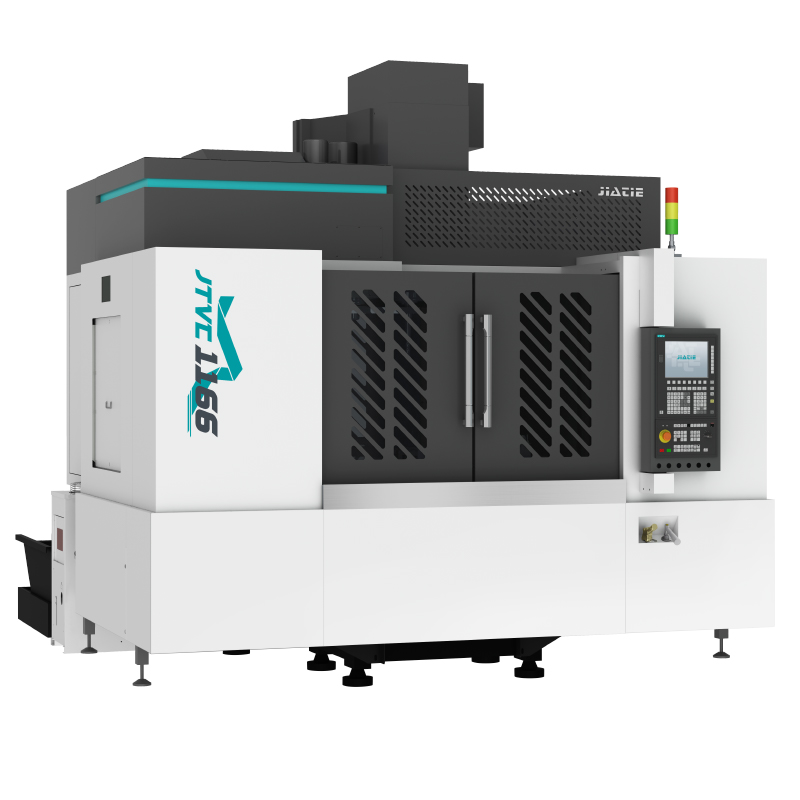
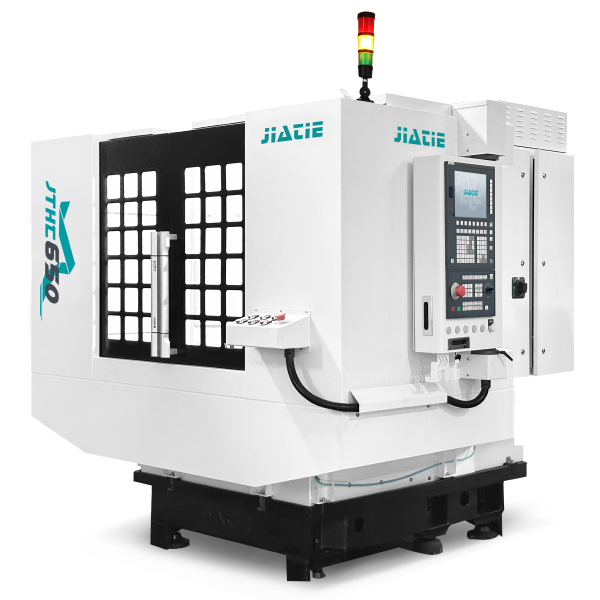
- Vertical and horizontal machining centers. A front or side loading door and a stable table position make these the easiest machines to automate. Pallet systems extend the idea further by loading the machine while it is still cutting.
- CNC Grinding Machines. Tighter tolerances and fragile finished surfaces mean the gripper and the loading force need more attention than the robot itself.
- 5-Axis Machining Centers. Access can be restricted and the part often needs reorientation, so reach and wrist dexterity matter more than payload.
- Graphite and hard-brittle machining. Dust and swarf control become part of the cell design; sealing and extraction are not optional extras.
This is why the most reliable route to automation is a supplier who builds the machine tool as well as the cell. When the machine and the loader are designed by the same engineering team, the interface — door sequencing, clamping signals, safe positions, alarm handling — is already solved rather than being re-invented at the customer site.
Robotic CNC machine tending also benefits from that shared engineering in a second way: the machine can be specified with automation in mind from the start. An automatic door, a chip conveyor sized for the loading cycle, and a table that presents the fixture to the robot are cheap options at the factory and expensive retrofits afterwards.
A Practical Machine Tending Checklist Before You Buy
Use this list when comparing machine tending solutions. A supplier who can answer all of it is a supplier who has done this before.
- Which of my parts will the cell run first, and which parts will it never run?
- What is the guaranteed load and unload time, and does it fit inside my shortest cycle?
- How does the cell handle a part that fails to seat, or a machine alarm mid-cycle?
- What happens on a changeover — how long, and who does it?
- Can the cell be extended later to a second machine, or to a pallet pool?
- Who writes the risk assessment, and who signs it off?
- What is the commissioning and training scope, and the support response time?
FAQ
How much does a machine tending robot cost?
A single-machine cobot cell typically starts in the region of USD 40,000–70,000 installed, while a high-volume articulated robot cell with automatic feeding commonly runs from USD 80,000 upward. The robot itself is usually the smaller part of the budget — EOAT, feeding, guarding and integration dominate. Ask for a cell price, not a robot price.
Can one machine tending robot serve several machines?
Yes, and this is where the economics improve sharply. A robot on a linear track or a mobile base can tend two or three machines, so the investment is shared while the recovered spindle hours multiply. It works best when the machines run similar parts and similar cycle times.
Do I need vision-guided robotics for machine tending?
Only if parts arrive randomly oriented, or if the position after machining varies. If parts are presented on a tray or a pallet in a repeatable position, mechanical location is cheaper, faster and easier to maintain.
Is a cobot always safer than an industrial robot?
No. A cobot is designed to be able to operate collaboratively, but safety still depends on the application. Speed, force, the tooling and the part all feed into a risk assessment, and guarding may still be required.
Working With a Machine Tending Partner
Machine tending robotics has matured to the point where the technology is rarely the limiting factor. What still separates a good project from a bad one is whether somebody has thought carefully about your parts, your batch sizes and your changeover routine before quoting a robot.
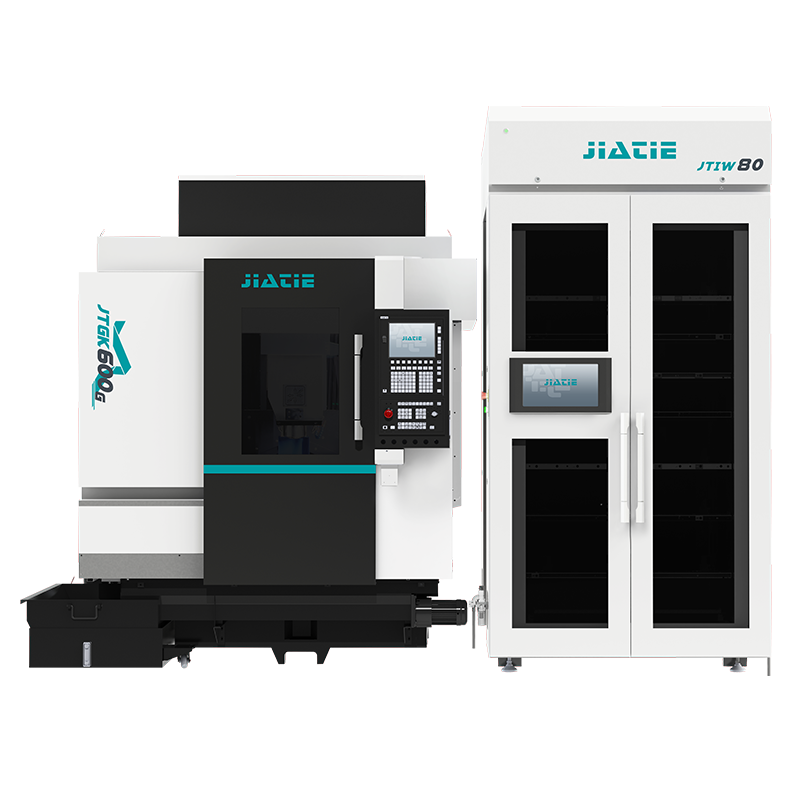
Kejie builds CNC machining centers, grinding machines and 5-axis machines, and designs the automation that loads them. That means the machine tending cell is specified against a known machine interface rather than adapted to it afterwards — from the JTGS-600Au and JTHS-600Au automation units for graphite and high-speed machining, through to the JTIW-80 flexible automation unit. You can see the whole range on our machine tool intelligent solution page.
If you are evaluating machine tending automation, send us your part drawing, your batch sizes and your machine model. We will tell you honestly whether a cell pays back in your case, and which architecture we would choose.