

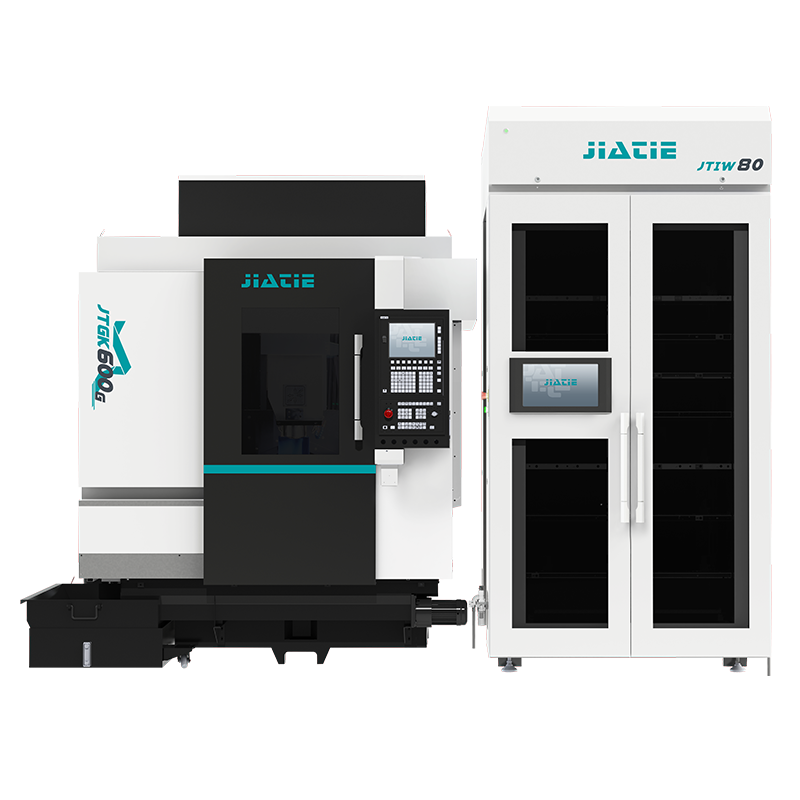
What Makes a Horizontal Machining Center the Preferred Choice for Multi-Face Precision Machining?
As manufacturing industries continue to demand higher productivity, tighter tolerances, and reduced setup times, the Horizontal Machining Center (HMC) has become an increasingly important solution for precision metalworking. Unlike traditional machining methods, a CNC Horizontal Machining Center enables multiple machining operations to be completed in a single setup, helping manufacturers improve efficiency while maintaining consistent quality.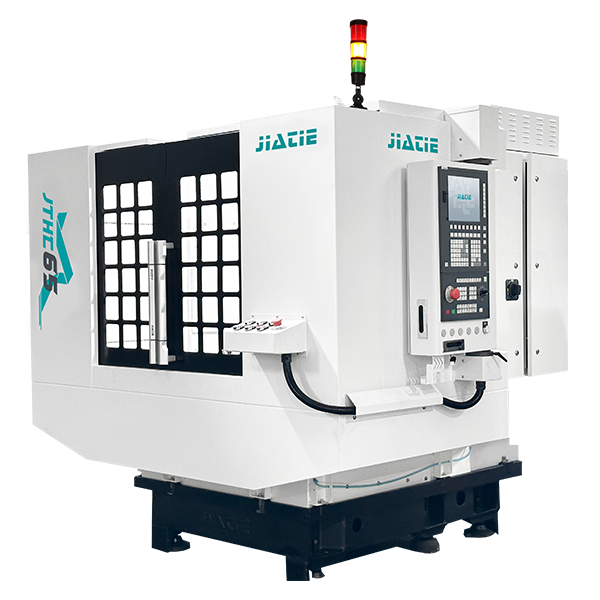 What Is a Horizontal Machining Center?
A Horizontal Machining Center is a CNC machine tool with a spindle positioned horizontally to the worktable. This machine configuration allows chips to fall away naturally during cutting, reducing heat accumulation and minimizing the risk of secondary cutting damage. Compared with many conventional machining setups, horizontal machining technology is particularly suitable for machining box-shaped components, structural parts, housings, and complex workpieces requiring multiple surfaces to be processed.
Industry studies show that Horizontal Machining Centers can significantly improve spindle utilization and machining efficiency because multiple faces of a workpiece can often be accessed in a single clamping operation. This reduces manual repositioning and improves dimensional consistency between features.
Why Is Multi-Face Machining Important?
In industries such as telecommunications, industrial Automation, electric vehicles, and precision equipment manufacturing, components frequently require machining on several surfaces. Traditional methods may require multiple setups, increasing cycle times and introducing positioning errors.
A modern Horizontal Machining Center solves this challenge by combining milling, drilling, boring, and tapping operations into one machining platform. Through automatic tool changing and programmable multi-axis movement, manufacturers can achieve higher production throughput while maintaining stable machining accuracy.
| Manufacturing Challenge | Horizontal Machining Center Solution |
|---|---|
| Multiple setups required | Multi-face machining in one clamping |
| High labor costs | Automatic tool changing system |
| Chip accumulation | Gravity-assisted chip evacuation |
| Thermal deformation | Spindle temperature control system |
| Inconsistent accuracy | Stable machine structure and CNC control |
How Does the JTHC-65 Horizontal Machining Center Improve Production Efficiency?
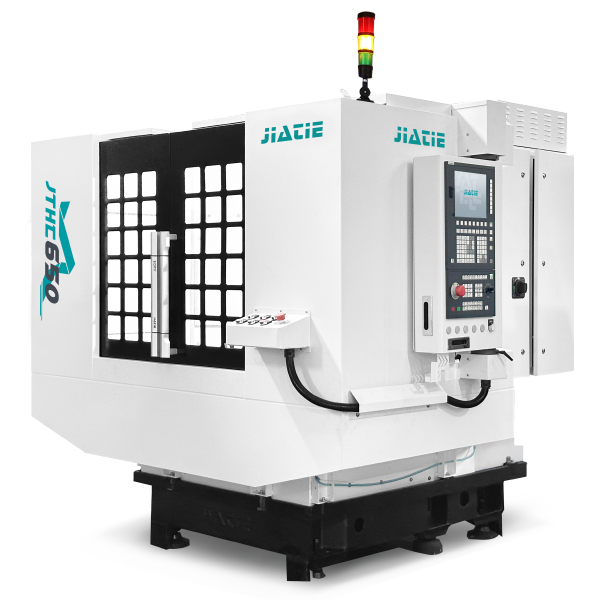
The JTHC-65 Horizontal Machining Center is designed for small and medium-sized precision manufacturing environments. Equipped with a spindle and transmission temperature control system, the machine effectively manages thermal deformation during high-speed operation, helping maintain machining stability throughout long production cycles.
The machine integrates milling, drilling, tapping, and other machining functions into one compact platform. Its automatic tool change capability allows multiple processes to be completed without manual intervention, reducing downtime and improving productivity.
With X/Y/Z travel of 630/700/340 mm and a worktable size of 600 × 500 mm, the machine is suitable for precision components requiring high repeatability and efficient batch production.
How Does a Horizontal Machining Center Benefit Aluminum Component Manufacturing?
Aluminum components are widely used in communication equipment, EV systems, automation devices, and lightweight industrial assemblies. These parts often require multiple holes, pockets, mounting surfaces, and precision features distributed across different faces.
A Horizontal Machining Center allows these features to be machined in fewer setups, improving geometric accuracy and reducing production costs. Efficient chip evacuation is particularly beneficial when machining aluminum because chips can be removed quickly from the cutting area, improving surface finish and extending tool life.
Typical Applications of Horizontal Machining Centers
Telecommunication Base Station Components
Motor Base Fixtures and Structural Parts
Industrial Automation Components
Aluminum Precision Housings
Mechanical Transmission Components
Electrical Equipment Structural Parts
Precision Mold and Fixture Manufacturing
Horizontal Machining Center vs Vertical Machining Center
| Feature | Horizontal Machining Center | Vertical Machining Center |
|---|---|---|
| Multi-Face Machining | Excellent | Limited |
| Chip Removal | Automatic by Gravity | Manual Cleaning More Frequent |
| Automation Potential | High | Moderate |
| Batch Production | Excellent | Good |
| Complex Workpieces | Ideal | Moderate |
Conclusion
For manufacturers seeking higher productivity, improved machining consistency, and reduced setup times, a Horizontal Machining Center provides a competitive advantage. By combining multi-process capability, advanced CNC control, efficient chip management, and thermal stability, machines such as the JTHC-65 help manufacturers achieve reliable precision machining for modern industrial applications.